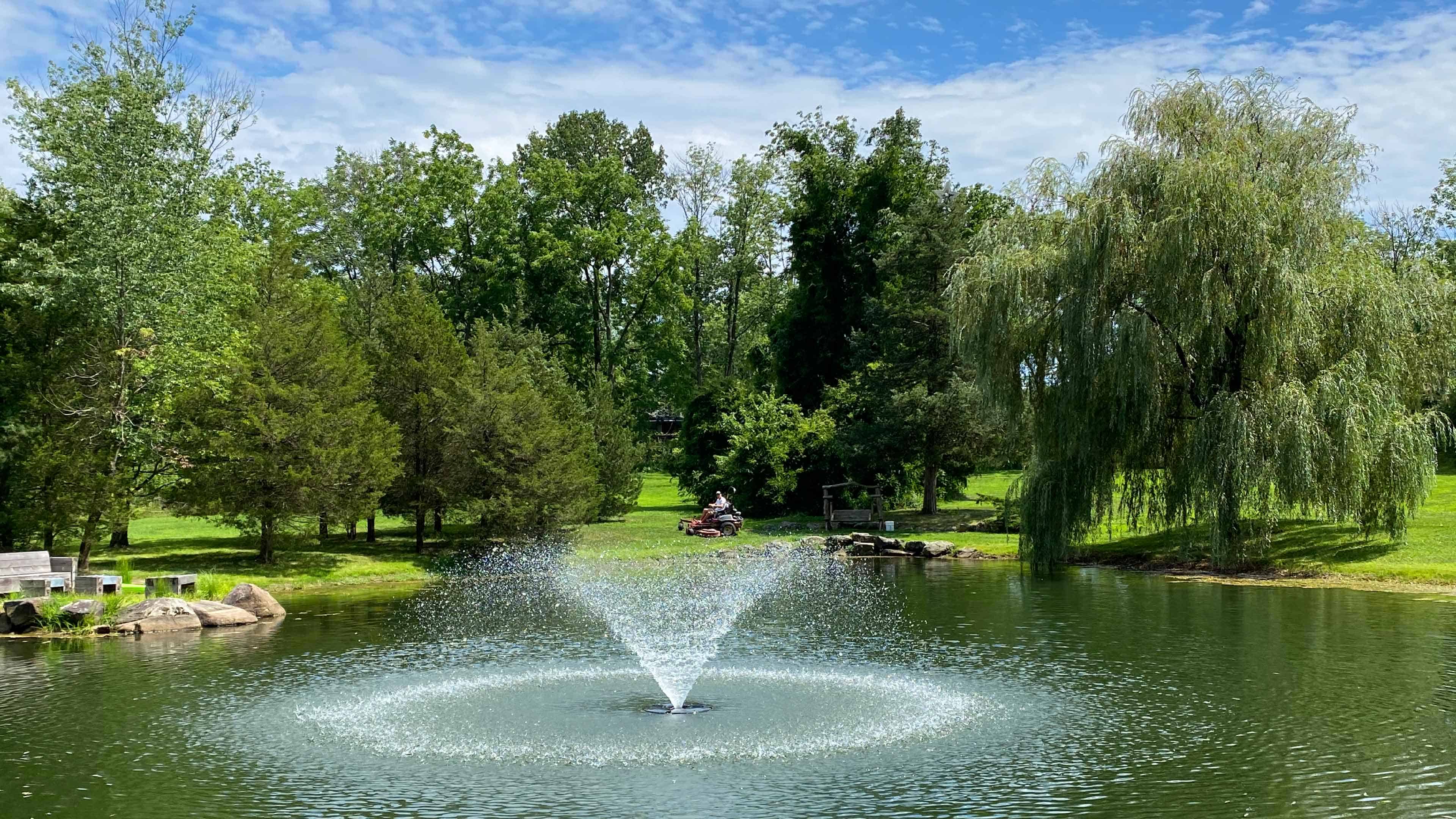
Waterfalls, fountains and ponds are awesome backyard additions—particularly if they’re well kept. Follow these water feature maintenance tips from Mother Nature News to keep your backyard pond or water feature clear and clean for years of enjoyment.
How to Keep Outdoor Fountain Water Clean
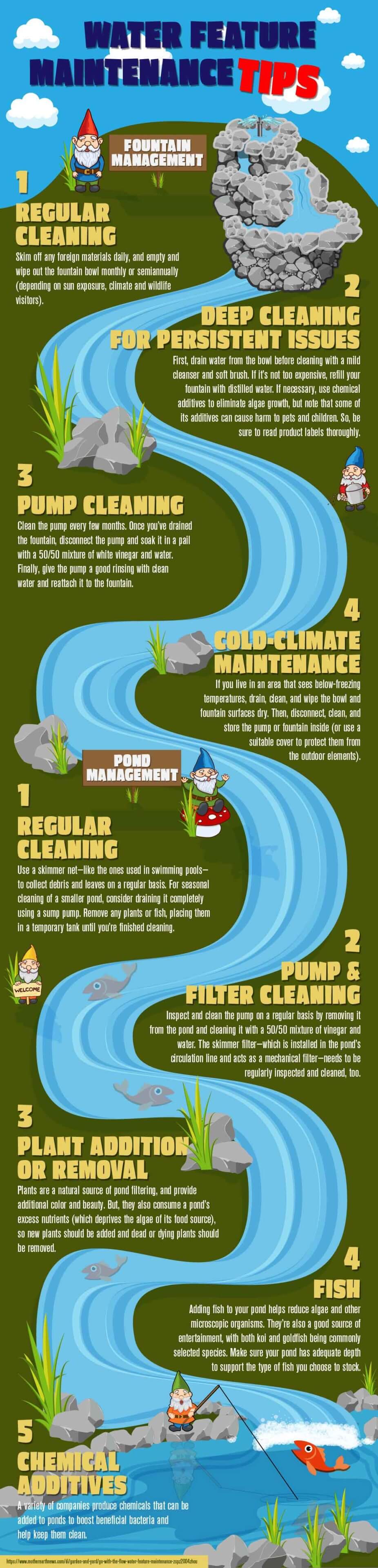
- Regular routine: Skim off any foreign materials daily. Empty and wipe out the fountain bowl monthly or semi-annually (depending on sun exposure, climate and wildlife visitors).
- Pump cleaning: Clean the pump every few months. Drain the fountain, disconnect the pump and soak it in a pail with a 50/50 mixture of white vinegar and water. Finally, give the pump a good rinse with clean water and reattach it to the fountain.
- Winter maintenance: If you live in an area that sees below-freezing temperatures, drain, clean, and wipe the bowl and fountain surfaces dry. Then, disconnect, clean, and store the pump or fountain inside. Or, use a suitable cover to protect your water feature from the outdoor elements.
- Drain and scrub: For persistent issues, drain water from the bowl before cleaning with a mild cleanser and soft brush. If it’s not too expensive, refill your fountain with distilled water.
- Chemical additives: Sometimes you will need to use additives to slow persistent algae growth. But note, that some additives can cause harm to pets and children. Be sure to read product labels thoroughly.
How to Keep an Outdoor Pond Clean
- Regular routine: Use a skimmer net—like the ones used in swimming pools—to collect debris and leaves on a regular basis. For seasonal cleaning of a smaller pond, consider draining it completely using a sump pump. Remove any plants or fish, placing them in a temporary tank until you’re finished cleaning.
- Pump maintenance: Inspect and clean the pump on a regular basis. Do this by removing it from the pond and cleaning it with a 50/50 mixture of vinegar and water. The skimmer filter—which is installed in the pond’s circulation line and acts as a mechanical filter—needs to be regularly inspected and cleaned, too.
- Plant addition or removal: Plants are a natural source of pond filtering, and provide additional color and beauty. But, they also consume a pond’s excess nutrients, which deprives the algae of its food source. So, new plants should be added and dead or dying plants should be removed.
- Fish: Adding fish to your pond helps reduce algae and other microscopic organisms. They’re also a good source of entertainment, with both koi and goldfish being commonly selected species. Make sure your pond has adequate depth to support the type of fish you choose to stock.
- Chemical additives: A variety of companies produce chemicals that can be added to ponds to boost beneficial bacteria and help keep them clean.