Exmark Z Turf Equipment Backyard Life
  • Skip to primary navigation
  • Skip to main content
  • Skip to primary sidebar

Exmark's Backyard Life

Living Happens Outdoors

  • Mowing
  • Outdoor Living
  • Lawn + Garden
  • Ambassadors
  • Originals
  • About Exmark
  • Subscribe to Backyard Life
Search
Home / Rural Lifestyle /
Updated: Mar 27, 2026 | Posted: Sep 21, 2022

Hinge Cutting Trees with Joe Thomas

If you’re like Joe Thomas, Exmark Ambassador, and expert hunter and fisherman, then you’re probably thinking of ways you can increase the population of your hunting grounds. Believe it or not, one of the best ways to do that is by creating what Thomas calls “sanctuaries” on your property. And the best way to do that is using a management technique that many people don’t know about: hinge cutting trees.

The best thing about this method? You’re using trees that already exist. 

What Is Hinge Cutting?

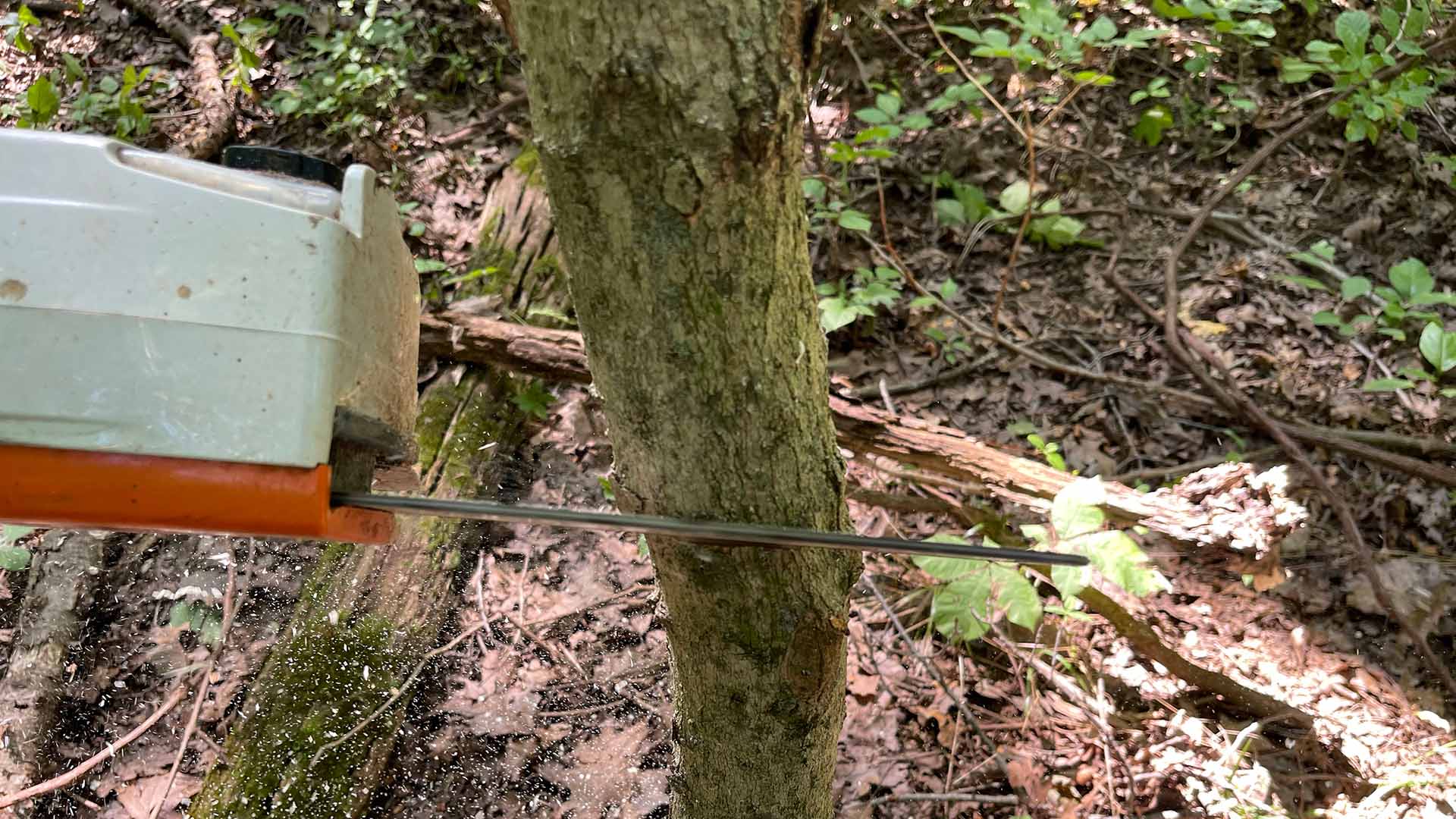
If you’re unsure just what hinge cutting is, Joe Thomas breaks it down for you with a quick definition. As he says, hinge cutting trees is “a technique where you utilize a chainsaw or a pole pruner to score the tree about three quarters of the way through and then fold it over.” This method allows the folded top of the tree to stay connected and continue to get nourishment from the root system.
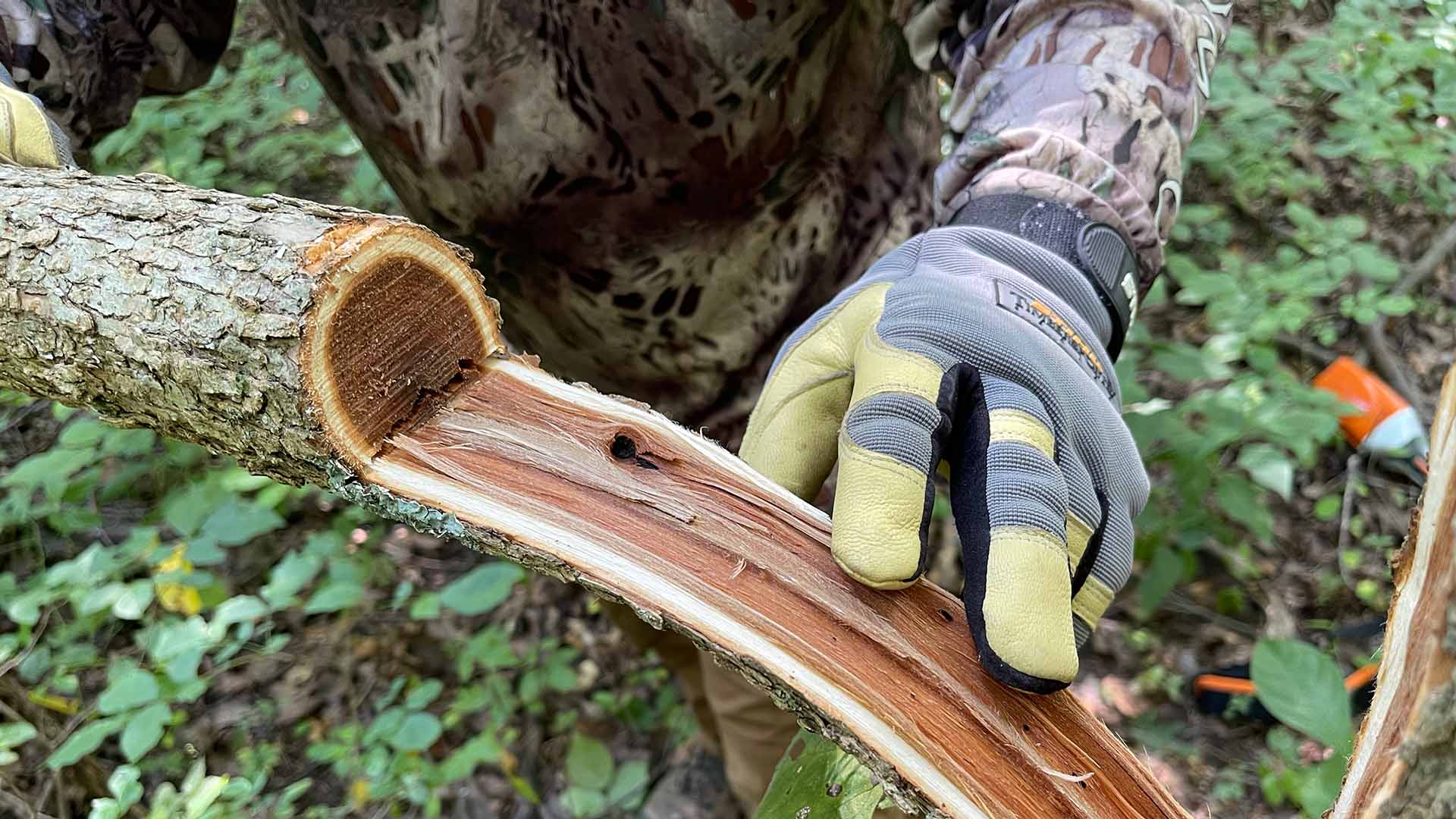
An example of hinge cutting trees for deer beds

Why Hinge Cutting Improves Deer Habitat

A properly hinge-cut tree does three things that deer need most:

  • Easier browsing. Bringing the tree’s canopy down to ground level gives deer immediate, easy access to leaves and branches they couldn’t reach before.
  • Safe bedding cover. The folded tree creates a shaded, sheltered spot where deer—and wild turkeys—can bed down feeling protected from predators.
  • New low growth. Folding a tree opens up the canopy above it, allowing sunlight to reach the forest floor. That triggers the growth of low vegetation and green briars, which deer love to feed on.

How to Choose the Right Location and Trees for Hinge Cutting

The most important rule: hinge cut well away from where you actually hunt. The goal is to create a sanctuary—a safe, undisturbed space that attracts and holds game on your property. If you hinge cut too close to your stand, you’ll push deer away rather than draw them in.

Look for areas with a mix of older hardwood growth and younger trees. That variety gives you the most flexibility and produces the best habitat results.

Best Tree Size and Species for Hinge Cutting

Target trees that are between 4 and 9 inches in diameter. Trees in this range are manageable to cut and fold cleanly, and they create the best structure for bedding and browse.

  • Red Maple: The top choice, especially in the Midwest. Widely available and responds well to hinge cutting.
  • Cedar: Works well, but requires a nearby tree to fall against. If a cedar crashes straight to the ground, it won’t stay connected to the root system and the technique won’t work.
  • Ash trees: Avoid these entirely. In Thomas’s words, you want to stay away from ash trees “like the plague”—they simply don’t work for hinge cutting.

How to Hinge Cut a Tree

Safety First

Before you make a single cut, gear up properly. Eye protection, ear protection, and hand protection are non-negotiable when working with a power tool. For larger trees that require a chainsaw, add a helmet and face screen to your kit. Thomas uses a pole saw for smaller trees, which doesn’t require head protection—but adjust your PPE based on the equipment you’re using.

The Cut

Now you’re ready to make your cut: 

  1. Look at the area where you want the tree to fold and confirm it’s clear of obstructions.
  2. Scan for dead branches overhead that could fall and cause injury when the tree moves.
  3. Cut at between waist and head height, and stop when you’ve gone about 75% through the trunk—not all the way.
Making the first Hinge cut with a chainsaw

Key Points to Remember

Before the video ends, Thomas leaves you with a few key points to remember: 

  1. Cut between waist and head height. This gives the folded tree the right height for bedding cover and browsing.
  2. Stop at three-quarters of the way through. Going all the way through severs the connection to the root system and defeats the purpose.
  3. Look at the lean of your tree. Gravity is your friend! If your tree starts to lean, you can push it or pull it to help it out and do a little less cutting.


Frequently Asked Questions About Hinge Cutting for Deer Habitat

Late winter or early spring is generally considered the best time. The trees are dormant, making them easier to work with, and the new growth that follows in spring gives deer an immediate food source.

Not if done correctly. A proper hinge cut—stopping at three-quarters through—keeps the tree alive and connected to its root system. The folded top continues to grow, leaf out, and produce browse for years.

You may notice deer activity in and around hinge-cut areas within the first season, especially if you’ve created a connected sanctuary area with multiple cuts. Full canopy opening and low-growth vegetation can take one to two growing seasons to fully establish.

More Like This:

  • Create a Wildlife Habitat Plan for Your Yard
  • Deer Food Plot Tips with Michael Waddell
  • How to Frost Seed Clover Food Plots

By Joe Thomas

Play Joe Thomas has long been regarded as one of the sportfishing and hunting industries’…

Tags

Joe ThomasOutdoor Prowildlife

Primary Sidebar

Stay Connected

Keep living your best backyard life all year round. Get alerts on the latest Original Series updates, along with the inspiration and know-how you need to enjoy backyard life to the fullest!

Loading
More from Joe Thomas
Joe Thomas Talks about Late season food plots
Late Season Food Plots
Joe Thomas using his Exmark mower to stripe his lawn
The Benefits of Lawn Striping
Grill deer tenderloin and corn cooking on a grill
Grilled Deer Tenderloin Recipe by Joe Thomas
Staff Picks
10 DIY Projects for Backyard Living
Deer Season Prep with Michael Waddell
5 Great Fire Pit Seating Ideas
Mosquito Control in Ponds and Backyards
Greg Mrvich’s Copycat Le Barchen Mac Wagyu Burger
  • Home
  • Mowing
  • Outdoor Living
  • Lawn + Garden
  • Ambassadors
  • Originals
  • Subscribe
  • Facebook
  • x
  • YouTube
  • Instagram
  • Tiktok

Copyright © 2026 EXMARK - Backyard Life

  • Privacy Policy
  • Terms of Use
  • DMCA

Trending