
Exmark Z Turf Equipment Backyard Life
  • Skip to primary navigation
  • Skip to main content
  • Skip to primary sidebar

Exmark's Backyard Life

Living Happens Outdoors

  • Mowing
  • Outdoor Living
  • Lawn + Garden
  • Ambassadors
  • Originals
  • About Exmark
  • Subscribe to Backyard Life
Search

Prime Cuts: Cast Iron Cornbread Recipe

October 17, 2023 by Exmark

You’d be hard-pressed to find a traditional southern meal that doesn’t come with a side of cornbread. It’s a versatile dish that pairs well with just about any food under the sun. But did know you only need a single cast iron skillet to create cornbread that’s bound to be a backyard party showstopper? Join chef and restaurateur, David Bancroft, and his friend John Cassiumus as they as they show you how to make this homemade cornbread recipe in a miniature cast iron skillet during our recent Prime Cuts: Cast Iron Edition video.

History of Cornbread

Cornbread’s become a mealtime staple for any manner of southern recipe. But did you know its origins predate the American colonies by a few hundred years—if not longer? Corn was a staple crop for Native Americans, used make a wide variety of dishes—cornbread among them. They would often add chestnuts, sunflower seeds, apples, or berries (and sometimes even beans or potatoes) to enhance the flavor of the simple batter.

Once the American colonies started to be developed, cornbread became a meal of necessity for the southern settlers, who struggled to grow European wheat and rye in the hot and humid summers. But it wasn’t until the early 1800s that the cornbread we all know and love came into existence, when farmers started adding buttermilk, eggs, baking soda, baking powder, and pork products to get the most flavor out of this simple dish.

How Bancroft Makes this Recipe His Own

To really perfect this dish, David likes to let his cast iron get as hot as possible, which creates a nice, crispy sear for the crust. That ups the subtle crunch factor when it’s time to dig in. But it’s not just extreme heat alone that makes his homemade cornbread recipe so great. He likes to use his “secret ingredient” at every opportunity he can: melted salted butter.

And, to push the flavor to the next level, Bancroft tops his cornbread with a sprinkling of benne seeds. Benne seeds are heirloom sesame seeds that have become popular in the South Carolina Lowcountry. They add a perfect toasty, nutty flavor that pairs great with the savory cornbread, hot sauce, and crispy crust.

Once this cook is all said and done, Bancroft says to cut it into smaller portions and share right away. Oh, and don’t forget to pair it with some delicious brisket Brunswick stew, too!
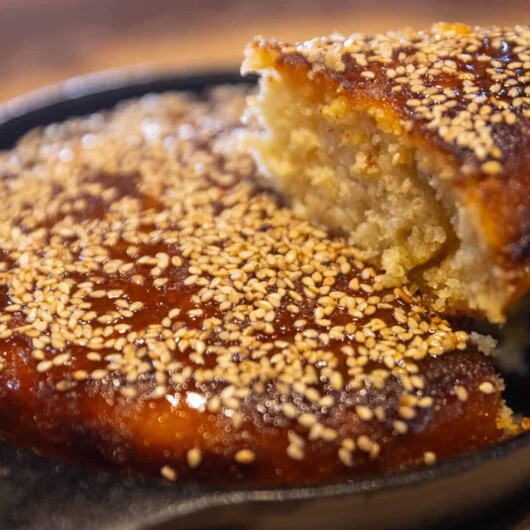
Cast Iron Cornbread Recipe
Pin
Print

Cast Iron Cornbread Recipe

Cuisine: AmericanDifficulty: Easy
Servings

4

servings
Total time

20

minutes

Ingredients

  • Batter
  • 520 g. Cornmeal

  • 365 g. All-purpose flower

  • 220 g. Sugar

  • 1½ tbsp. Baking powder

  • 1½ tbsp. Kosher salt

  • 3 eggs

  • 815 g. Whole milk

  • 150 g. Melted butter

  • Honey Hot Sauce Butter
  • ¼ lb. Salted butter (melted)

  • ½ cup Local honey

  • 3 tbsp. Hot sauce (your choice)

  • Cornbread Topping
  • 1 package Benne seeds

Directions

  • Batter
  • Mix cornmeal, all-purpose flower, sugar, baking powder, and kosher salt together in a large bowl.
  • In a separate bowl, mix the eggs and milk together.
  • Add the wet ingredients to the dry mixing bowl and whisk until smooth.
  • Add the melted butter and whisk again until smooth.
  • Let chill for one hour.
  • Honey Hot Sauce Butter
  • Whisk all the ingredients together until smooth, adjusting the hot sauce to your preference.
  • Place to the side until the cornbread is fully baked.
  • Baking
  • Preheat oven to 375° F and heat cast iron skillet over medium-high on the range. Add butter until melted.
  • Pour enough batter to fill the skillet to almost 3/4th of the way full.
  • Once the edges begin to roll over, place the skillet into the oven for about 12 to 14 minutes.
  • Remove from oven. (Note: At this point, the cornbread should be slightly underdone in the center and start to form a crown towards the top.)
  • Flip the cornbread upside down onto a plate and slide it back into the skillet, now with the bottom side facing up.
  • Return the skillet to the range on medium heat and cook for another 30 seconds.
  • Spoon on the honey hot sauce glaze until the top of the cornbread is evenly coated. Allow it to simmer for 60 seconds on medium heat.
  • Remove from the range and sprinkle benne seeds over the top to serve.

Notes

  • This recipe is designed for smaller skillets but can still be oven-baked all the way through on a larger skillet. However, using a larger skillet means it can’t be flipped over.
  • If you can’t easily find benne seeds, sesame seeds are a great alternative.
More Like This:

  • Joe Thomas’ Moose Chili Recipe
  • White Chicken Chili Recipe
  • Ballistic BBQ Asian Ribs Recipe

Filed Under: Outdoor Living Tagged With: Backyard Grilling, cook, David Bancroft

Prime Cuts: Cast Iron Brisket Brunswick Stew Recipe

October 17, 2023 by Exmark

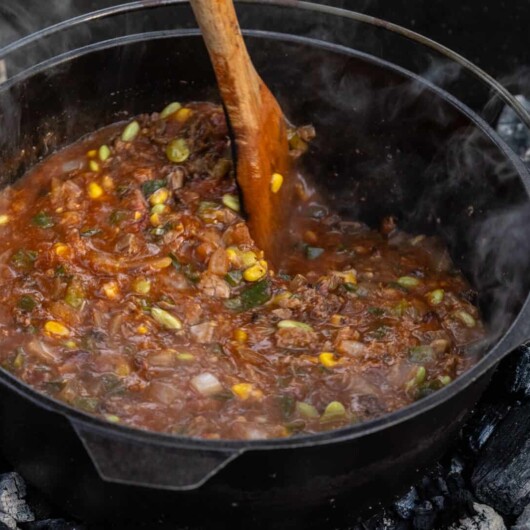
With cooler weather around the corner, it’s almost time to start breaking out your cast iron pots to whip up a meal that’ll warm you to the bone on those chilly nights. And what better way to warm up during your backyard gatherings than with a mouthwatering bowl of brisket Brunswick stew? You can watch chef and restaurateur, David Bancroft, and his friend John Cassiumus as they bring this legendary recipe to life—creating a hearty brisket Brunswick stew using nothing but a cast iron pot in our recent Prime Cuts: Cast Iron Edition video.

History of Brunswick Stew

Brunswick stew has long been one of the definitive southern dishes, getting its start as an end-of-harvest-season recipe where leftover veggies and grains were cooked with whatever small game could be found to create an incredibly hearty meal. However, this dish is one that comes with a fair bit of controversy, too: towns in both Virginia and Georgia claim to be the birthplace of this famous stew—and both even have a statue of a cast iron pot to try and further solidify their claim! Regardless of its origins, there’s no doubt that this dish is one that will have your friends and family coming back for seconds (or even thirds).

How Bancroft Makes It His Own

To up the ante on his stew, David is using fresh pit-smoked brisket from his restaurant Bow & Arrow, which he had going for about 18 hours, “low and slow,” in the pit. After those 18 hours were through, he wrapped it up in some butcher paper and threw it back in the pit for a little while longer to get a perfect melty, smoky flavor.

David also says that Brunswick stew is always better the next day—giving time for all the seasonings and aromas to settle and mingle together really makes the flavor pop. Whether you wait a day or not, this recipe will instantly be backyard party-ready and perfect to pair with some home made cornbread right out of the skillet.

Cast Iron Brisket Brunswick Stew
Pin
Print

Cast Iron Brisket Brunswick Stew

Course: MainCuisine: AmericanDifficulty: Easy
Servings

4

servings
Total time

45

minutes

Ingredients

  • 2 tbsp. Peanut oil

  • 1 Large white onion (diced)

  • 2 Poblanos (seeded and diced)

  • ¼ cup Worcestershire sauce

  • (1) 28 oz. can San Marzano tomatoes

  • (2) 12 oz. bag Frozen butter beans

  • (2) 14½ oz. cans Creamed corn

  • 1 cup BBQ sauce (your choice)

  • 2 to 4 Bay leaves

  • 32 oz. Beef stock

  • 1 to 1½ Cups Brisket (chipped/chopped/shredded)

  • ¾ to 1½ BBQ spice rub (to taste)

Directions

  • Add peanut oil, diced onions, and diced poblanos to a medium stew pot or kettle and simmer until the veggies are soft.
  • Take each San Marzano tomato and crush into smaller pieces by hand. (If you want a little more tomato flavoring, pour the remaining tomato juice from the can into the pot.)
  • Bring the pot to a simmer and add in the butter beans, creamed corn, bay leaves, and Worcestershire sauce, and let simmer for another 5 minutes.
  • Add in the beef stock and your choice of BBQ sauce and bring to a slow simmer for 10 minutes.
  • Add brisket meat in the consistency of your liking—either chipped, chopped, or shredded.
  • Bring to a slow simmer and adjust the seasoning and salt content using your favorite BBQ spice rub.

Recipe Video

Notes

  • The amount of BBQ spice rub used may vary depending on the original salt content of the BBQ sauce and brisket you use—it’s all personal preference.
  • If cooking with cast iron, make sure your kettle is properly seasoned before you add in the Worcestershire sauce.
  • You don’t have to limit yourself to brisket for this meal—any type of meat will work perfectly.

More Like This:

  • Joe Thomas’ Moose Chili Recipe
  • White Chicken Chili Recipe
  • Prime Cuts: Sous Vide Wild-Turkey on the Grill

Filed Under: Outdoor Living Tagged With: Backyard Grilling, cook, David Bancroft

Ballistic BBQ Asian Ribs Recipe

September 21, 2023 by Exmark

There are very few backyard meals better than a rack of ribs fresh off the smoker—and combined with a one-of-a-kind BBQ rub and sauce, they’ll easily knock the socks off even the biggest food critics. But how do you go about taking this famous meal to the next level? Ballistic BBQ’s Greg Mrvich has the answer with his tantalizing Asian ribs recipe.

Before you fire up the smoker, why not read up on the ingredients used to make this Asian-inspired recipe? You’re sure to dazzle guests during your next backyard get-together with both your mouthwatering Asian ribs and knowledge of some ingredients they might not be too familiar with.

Breakdown of Asian-Inspired Ingredients

For this cook, Mrvich reaches into influences from China, Korea, and Japan to really give it a distinct flavor.

After trimming the ribs, he grabs his Chinese fried chili oil and starts lathering a healthy dose of it over the racks to add a nice layer of heat. He focuses on the oil for its flavor-binding quality but allows a few chilis to be rubbed on to add a little extra kick.

Tapping into the concept of “umami”—or savoriness, one of the five basic tastes in Japanese culture—he uses Togarashi Japanese seasoning and Chinese Five-spice for his BBQ rub. Togarashi Japanese seasoning is a blend of nori (little bits of seaweed), bonito flakes (smoked fish, which taste more smoky than fishy), and a combination of toasted sesame seeds, pepper, and salt. And Chinese Five-spice adds a unique, recognizable flavor and smell—if you’ve ever had roasted duck or pig from an authentic Chinese restaurant, you’ll identify it right away.

Just like the rub, the BBQ sauce for Mrvich’s Asian ribs recipe is all over the place for influence. He kicks off this part of the cook with some Asian plum sauce—a Chinese dipping sauce often served with wontons that adds a subtle, yet sweet, plum flavor. The sauce is then followed up by a quick pour of sake, specifically Ginjo, which is a dry sake with a note of melon that pairs well with pork. What makes Ginjo sake so unique comes in the brewing process—after polishing (or the removal of the top layers of grain), only 60% of the original rice remains, resulting in a smoother pour and taste. Finally, Mrvich drops in a tablespoon of Gochujang, a Korean fermented chili paste which has a nice blend of that fermented flavor, spiciness, and sweetness.

Ballistic BBQ Asian Ribs Recipe
Pin
Print

Ballistic BBQ Asian Ribs Recipe

Cuisine: Asian
Servings

4

servings
Total time

3

hours 

Ingredients

  • Ribs
  • 2 Racks baby back ribs

  • 2 tbsp. Chinese fried chili oil

  • 1 tbsp. Raw sugar

  • Asian BBQ Rub
  • 4 tbsp. Togarashi Japanese seasoning

  • 1 tbsp. Chinese Five-spice

  • 1 Jalapeño pepper (minced)

  • Asian BBQ Sauce
  • 1 cup Asian plum sauce

  • 1/2 cup Sake (Ginjo)

  • 1/4 cup Soy sauce

  • 1/2 tbsp. Sweet onion (grated)

  • 1 tbsp. Toasted sesame seeds

  • 1 tbsp. Gochujang

  • 1/2 tsp. Ginger (chopped)

  • 3 cloves Garlic (chopped)

  • 1 tsp. Rice wine vinegar

Directions

  • Ribs
  • (Optional) Remove the membrane from the back of the ribs.
  • Brush both sides with the Chinese fried chili oil.
  • Once coated with oil, apply the Asian BBQ rub liberally on both sides and sprinkle a light amount of raw sugar on the meaty side of the ribs.
  • Preheat your smoker or grill to 250° F and place the ribs on the grate over indirect heat.
  • Check the progress of your ribs for “doneness” after 2½ hours of cooking.
  • Once the ribs have reached your desired tenderness, apply the Asian BBQ sauce to both sides and place back into the cooker for another 20 minutes.
  • After the ribs are done, remove and allow them to rest for another 20 minutes before serving.
  • Asian BBQ Sauce
  • Whisk ingredients together in a pot and bring to a boil.
  • Once boiling, reduce the heat to a low simmer and continue to let simmer until the sauce is thickened.
  • Asian BBQ Rub
  • Mix the minced jalapeño, seasoning, and Five-spice together in a bowl. Set aside.

Notes

  • When checking for “doneness,” you’re looking for “probe tenderness”—meaning that a meat probe or toothpick will be able to pierce the meat between the bones with little resistance. You are also looking for the meat to “pull back” or recede from the end of the bones.

More Like This:

  • Greg Mrvich’s BBQ Pig Wings
  • Greg Mrvich’s Grilled Jamaican Jerk Chicken Recipe
  • Ballistic BBQ Texas Cheesesteak Recipe

Filed Under: Outdoor Living Tagged With: Backyard Grilling, Ballistic BBQ, cook

Smoked Pompano Fish Spread Recipe

August 30, 2023 by David Bancroft

James Beard-nominated chef and Exmark ambassador David Bancroft is back with another hearty recipe for backyard events. This time, he’s looking to the sea for his ingredients. Bancroft has created a smoked fish spread recipe using the mild Florida pompano fish. He’s combined it with some delicious, flavorful spices. Your next backyard event is going to be even better when you add this dish to it.

Bancroft Kids showing off their fresh pompano catch

All You Need to Know About Pompano

If you’ve spent a lot of time on the water, you’ve already heard of the pompano, a part of the jack family,. If you’re a regular salt water angler, you’ve likely filled the boat with them a time or two. It’s a common fish in the Gulf of Mexico, though it can range in location from Massachusetts to Brazil.

As with many fish, pompano is high in Omega-3 as well as other essential micronutrients for heart-healthy meals. The pompano is often called the most eatable fish in the world for a variety of reasons. The first is because it’s a generally mild-flavored fish that blends well in recipes without allowing spices and flavors to overpower the sea salt flavor at its core. It’s a great fish for using in recipes like this smoked fish spread because it offers that meaty flavor without being overwhelming.

Another reason the pompano is so popular is that you can fish for them year-round. Not something that can be said of quite a few of the fish the world enjoys. Because they’re readily available, they’re much easier to rely on in restaurants. Fully grown, they range from two to five pounds, so they’re not too challenging to reel in. You don’t have to be a hammer to hook these fish, and they’re plentiful off the Florida coast in the Gulf of Mexico, making them an easily accessible fish.

If you’re interested in trying this delicious fish but you’re not close to the ocean and you’re not a saltwater angler, you can check with your local butcher (sometimes even your local grocery store) or order online. And if you’re unsure what you want to do with that tasty pompano, try cooking it up in Bancroft’s latest recipe for Exmark’s Backyard Life below.

Smoked Pompano Spread Recipe
Pin
Print

Smoked Pompano Spread Recipe

Cuisine: AmericanDifficulty: Easy
Servings

4

servings
Total time

35

minutes

Ingredients

  • 4 boneless/skinless fillets

  • 1/2 tbsp salt

  • 1 tsp garlic powder

  • 1/2 tsp ground white pepper

  • 1/2 tsp sugar

  • 4 oz soft cream cheese

  • 1/2 cup dukes mayo (1/4c more if you prefer creamier)

  • a few dashes Tabasco

  • minced chives (optional)

Directions

  • Smoke the pompano fillets with your preferred wood flavor at 200°f until just cooked.
  • Remove from smoker and allow to cool for 5 min.
  • Add all ingredients including the smoked fish to a mixing bowl.
  • Either mash the fish with a fork into the mayo mix or use a hand mixer on the lowest speed.
  • If you prefer larger chunks, be sure not to over-mix during this step. If you like smoother dip, mix the dip to your liking.
  • Adjust salt and spice at the end to your preference.

Notes

  • Bancroft likes to serve this dip with ‘Wickles Pickles’ and Saltines or Ritz crackers.

More Like This:

  • Grilled Pompano and Pickled Peppers Recipe
  • Grilled Redfish on the Half Shell
  • David Bancroft’s Jalapeño Popper Grilled Oyster Recipe

Filed Under: Outdoor Living Tagged With: cook, David Bancroft, Grilled Fish

David Bancroft’s Wild Mushroom Recipe

July 27, 2023 by David Bancroft

James Beard-nominated chef and Exmark ambassador David Bancroft is all about trying adventurous foods (have you seen his Jalapeño Popper Grilled Oyster recipe?). This time around, he’s trying out a wild mushroom recipe with mushrooms he foraged himself! Learn about the chanterelle mushroom, how to stay safe while foraging, and how to create his delicious compound butter, served up on filet mignon.

Wild Mushroom Foraging Safety

First and foremost, you want to proceed with caution while foraging for mushrooms! Never bring home a mushroom you’re not sure about—there are a lot of poisonous species out there that could make you sick, or could even be fatal.

If you’re new to mushroom foraging, be sure that you’re going out with a guide and a helpful identification app. Check and double-check before picking. And be sure that you thoroughly clean any mushrooms you bring home—you never know what bacteria might be living on them.

What Is a Chanterelle Mushroom?

Chanterelles are woodland mushrooms that grow exclusively in forests, typically in clusters directly underneath trees. There are several colors, but the most common (and best tasting) variety has a golden hue.

They’re one of the most expensive mushrooms around because they only grow for a few months in the summer and cannot be grown commercially. Finding them is a real treat, so when you get that lucky, you want to be sure you cook them into a meal designed for a special occasion.

David Bancroft Mushroom Foraging

How to Forage a Wild Chanterelle

The most important thing to keep in mind while foraging is that you pay attention to the gills (the soft, streaky flesh underneath the head) of the mushroom. Many mushrooms have soft gills that are completely separate and easy to detach. Chanterelles, however, have gills that are more like veins that run the length of the mushroom. Beyond that, chanterelle stems aren’t hollow, so when you pick them, it will be a firm stalk. Another way to identify a foraged mushroom as a chanterelle is by the scent—when you pick one, it should have a slight, apricot-like aroma.

How to Cook Chanterelles

There are a multitude of ways to cook chantarelles, but Bancroft is going to show you his favorite way—blended up into a compound butter, and spread over a tender, moist, filet mignon. Follow along for his favorite wild mushroom recipe.

David Bancroft's Wild Mushroom Recipe
Pin
Print

David Bancroft’s Wild Mushroom Recipe

Servings

4

servings
Total time

0

minutes

Ingredients

  • Foraged chanterelle compound butter
  • 1 quarter sliced white onion

  • 6 chopped garlic cloves

  • 1 lb chopped cleaned mushrooms

  • 1 sprig Thyme

  • 1/2 cup white wine

  • 1/2 cup heavy cream

  • 1 lb salted butter (room temperature)

  • 1/4 teaspoon turmeric

  • Cast iron seared filet mignon
  • 4 center cut 8oz steaks

  • 1 tablespoon fresh chopped rosemary

  • salt and pepper

  • 1/4 cup grapeseed oil

Directions

  • Foraged chanterelle compound butter
  • Melt 1/4 lb butter in small pot
  • Add onions and cook on medium low heat until soft
  • Add mushrooms and simmer until soft
  • Add garlic, wine, thyme, and turmeric
  • Simmer on low heat until wine is reduced by half
  • Add heavy cream and simmer on low until reduced by 1/3rd
  • Remove pot from stove and allow to cool five minutes
  • Purée in food processor until smooth
  • Add all ingredients and combine with room temp butter, make sure mushroom mixture is cool enough where it won’t melt the butter
  • Add mushroom butter to small bowl and refrigerate until easily handled but not solid
  • Roll out a 18 inches of plastic wrap flat onto counter
  • Place butter into a log shape down the middle of the plastic about 2-3 inch diameter
  • Wrap plastic over the butter into a log shape and twist the ends to form and tighten — this may take a few try’s to get right
  • Refrigerate the compound butter until firm
  • Cast iron seared filet mignon
  • Drizzle oil on steaks, season with salt, pepper, and rosemary to marinate
  • Place in fridge for an hour
  • Remove steaks and place on counter to acclimate to room temperature for 20 minutes prior to cooking.
  • Heat large cast iron on medium-high heat.
  • Pour oil into skillet and place steaks in cast iron with plenty of space between them
  • Sear each for 3-4 minutes until crispy
  • Ready to serve rare, to cook up a level of doneness, place into a 200° F oven to cook until desired level is reached.
  • A few degrees before the steaks reach your desired doneness, remove them from the heat
  • Turn oven on to broil
  • Slice off 1/4-1/2” medallions of compound
  • Place on top of each steak, and place steaks under broiler until butter begins to melt
  • Remove steaks before the butter fully melts and serve immediately

Notes

  • You can freeze the logs of butter for up to 6 months.

More Like This:

  • David Bancroft’s Smoked Texas Hot Links
  • David Bancroft’s Beef Brisket Melt
  • David Bancroft’s Smoked Venison Jerky Recipe

Filed Under: Outdoor Living Tagged With: cook, David Bancroft

Ballistic BBQ Texas Cheesesteak Recipe

July 17, 2023 by Exmark

Who doesn’t love a good cheesesteak? It’s one of America’s most beloved, and most famous, sandwich recipes. But who thinks “cheesesteak” and thinks “Texas”? When “cheesesteak” comes up, it usually brings to mind images of the City of Brotherly Love. But there are other cheesesteak sandwiches out there!

Learn all about the tasty, delectable Texas Cheesesteak with this recipe from Exmark Ambassador and barbecue extraordinaire Greg Mrvich from Ballistic BBQ.

What’s a Texas Cheesesteak?

Believe it or not, the only thing you need to make a cheesesteak sandwich is a hoagie roll and thinly sliced steak! It’s all about the heartier parts of the sandwich, so it’s crucial you’ve got great steak and thick hoagies before you get started. You can really level up that sandwich when you add in extras. The classic Philly Cheese we know and love comes with steak, green peppers, and onions, but there are ways you can make it even more unique than that!

Barbecue genius that he is, Greg Mrvich has combined one of America’s most beloved sandwiches, the Philly Cheesesteak, with some of the best flavors Texas has to offer to create something unique and exciting. Not only are those traditional Philly flavors there, but there’s the added flavor of Pepper Jack cheese, cheddar cheese, green onions, Fritos, and Mexican crema. It’s a hearty, flavorful sandwich that’s going to be your guests’ new favorite meal.

This delicious sandwich is so easy to cook up and it’s even easier to eat! You’re going to want to share this around every chance you get. You could even try pairing them with these tasty homemade potato chips. Or if you’re looking for something on the healthier side, you can try pairing them with this candied butternut squash recipe.

Texas Cheesesteak
Pin
Print

Texas Cheesesteak

Servings

4

servings
Total time

0

minutes

Ingredients

  • 12 ounces slice (uncooked) brisket flat meat

  • 2 onions, thinly sliced

  • 2 red bell peppers, sliced

  • 2 poblano peppers, sliced

  • chili powder, to taste

  • 2 cloves sliced garlic

  • ¾ cup beef tallow

  • 4 slices pepper jack cheese

  • 4 slices cheddar cheese

  • 2 green onions, chopped

  • ½ cup Fritos Corn Chips

  • 3 teaspoons Mexican crema

  • 2 sandwich rolls (crusty)

Directions

  • Preheat griddle to medium heat. Add about one tablespoon beef tallow to the griddle top in preparation for the cook.
  • Cook the onions and peppers until they become soft and translucent. Shake the chili powder, lightly coating the peppers and onions, then mix together on the griddle, using your spatulas, until thoroughly coated.
  • Push the onion and peppers mixture aside, and lay the thin slices of meat on the griddle. Cook until the meat is cooked through. At this time, lay your rolls, open-face down on the griddle to toast.
  • On the griddle, divide the meat into two equal portions and top with equal portions of the onion and pepper mixture. Top with the pepper jack and cheddar cheese, then flip, so that the cheese in face-down on the griddle.
  • Place the rolls open-face up and add the meat, onion and cheese mixture.
  • Top with Fritos, crema and green onion.

Notes

  • Any type of beef can be used for this sandwich.  Freezing it prior to slicing, helps you get those really thin slices!

Armed with this Texas Cheesesteak recipe, you can create one of the best sandwiches your backyard has ever seen for your next game party, backyard barbecue, or bonfire night.

More Like This:

  • Greg Mrvich’s BBQ Pig Wings
  • Greg Mrvich’s Grilled Jamaican Jerk Chicken Recipe
  • BBQ Tri-Tip Sandwich Recipe from Ballistic BBQ

Filed Under: Outdoor Living Tagged With: Backyard Grilling, Ballistic BBQ, cook

  • « Go to Previous Page
  • Go to page 1
  • Go to page 2
  • Go to page 3
  • Go to page 4
  • Interim pages omitted …
  • Go to page 12
  • Go to Next Page »

Primary Sidebar

  • Home
  • Mowing
  • Outdoor Living
  • Lawn + Garden
  • Ambassadors
  • Originals
  • Subscribe
  • Facebook
  • x
  • YouTube
  • Instagram
  • Tiktok

Copyright © 2026 EXMARK - Backyard Life

  • Privacy Policy
  • Terms of Use
  • DMCA

Trending